This Is How Lombok’s Architecture Steals Your Heart
You know that feeling when a place just gets you? Lombok didn’t just charm me—it rewired how I see travel. Forget cookie-cutter resorts; here, every roof curve and carved door tells a story. I’m talking traditional Sasak houses that breathe with the island, temples nestled like secrets in the hills, and modern builds that respect the soul of the land. If you’re after realness over resorts, this is your sign. Let’s dive into the structures that make Lombok unforgettable.
First Impressions: Walking Into a Living Culture
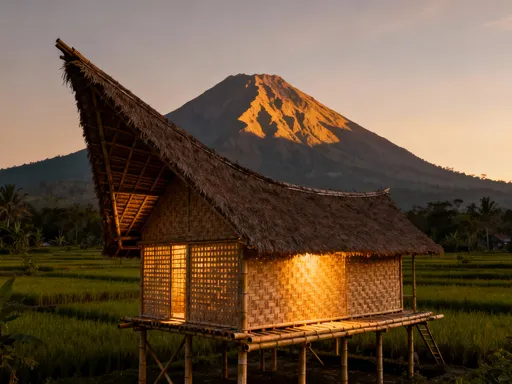
From the moment you step off the plane in Lombok, the island’s architecture signals that this is not Bali. There are no towering temple gates crowded with influencers or neon-lit shopping strips. Instead, you’re greeted by quiet villages where life unfolds under sloping thatched roofs and wooden homes raised on stilts. The built environment here reflects the values of the indigenous Sasak people—modesty, resilience, and community. Unlike Bali’s highly commercialized cultural displays, Lombok’s architecture remains deeply functional. Rice barns known as lumbung stand in orderly rows outside homes, not as photo props but as essential storage for the family’s harvest. Built on wooden posts and topped with thick alang-alang grass roofs, these structures are designed to protect grain from moisture and pests, proving that beauty and utility can coexist.
The layout of a traditional Sasak kampung, or village, further reveals this culture of togetherness. Homes are arranged in concentric circles around a central meeting hall called a balai adat, where elders gather to discuss community matters, resolve disputes, and celebrate ceremonies. This spatial design isn’t accidental—it’s a physical manifestation of collective life. Children grow up knowing their neighbors by name, and meals are often shared across households during festivals. In a world where digital isolation is rising, Lombok’s architecture offers a quiet reminder of how design can nurture connection. Even as tourism grows, many villages maintain their original layouts, resisting the pressure to reconfigure for convenience or profit. This integrity makes the experience of walking through a Sasak village not a staged performance but a genuine encounter with living heritage.
What’s most striking is the absence of architectural pretense. There are no attempts to impress outsiders with grand facades or imported materials. Instead, homes are built from what the land provides—bamboo, wood, palm fiber, and clay. Maintenance is a communal responsibility, with families repairing roofs and reinforcing stilts together before the rainy season. This shared effort reinforces bonds and ensures that knowledge is passed from one generation to the next. For the traveler, this authenticity is magnetic. You don’t need a museum plaque to understand the meaning behind a raised floor or a carved lintel. The buildings speak for themselves, telling stories of survival, harmony, and respect for nature.
The Soul of Tradition: Understanding Sasak Rumah Adat
The Rumah Adat, or traditional Sasak house, is more than a shelter—it’s a philosophy made tangible. Every design choice, from the height of the stilts to the angle of the roof, serves a purpose rooted in climate, culture, and belief. These homes are typically elevated between one and two meters above ground, a practical response to Lombok’s tropical downpours and occasional flooding. But this elevation also carries symbolic weight: it separates the sacred space of living from the earthly realm below, where animals may pass and impurities reside. Inside, the layout follows a strict hierarchy. The front area is reserved for guests and public interaction, the center for family life, and the rear—often screened off—for sleeping and private matters. This progression reflects the Sasak value of modesty and order.
Construction materials are entirely natural and locally sourced. Walls are woven from bamboo strips, sealed with a paste made from rice and natural resin to resist wind and rain. Floors are made of split bamboo or hardwood planks, allowing air to circulate beneath. The roof, perhaps the most iconic feature, is crafted from layered alang-alang grass, which provides excellent insulation. During the day, the thick thatch blocks the tropical sun, keeping interiors cool without the need for air conditioning. At night, it retains warmth when temperatures dip. This passive cooling system, perfected over centuries, is now being studied by sustainable architects around the world as a model of climate-responsive design.
Equally important are the decorative elements, which are far more than ornamentation. Carved wooden beams and doorframes often feature geometric patterns or stylized flora, each carrying spiritual significance. Some motifs are believed to ward off evil spirits, while others honor ancestral spirits or represent natural forces like wind and water. The most distinctive feature is the bagon roof—a steep, saddleback shape that mirrors the silhouette of Mount Rinjani, the island’s sacred volcano. By echoing the mountain’s form, the home aligns itself with the spiritual geography of Lombok, grounding the family in a larger cosmic order. Staying in a Rumah Adat, even a modern adaptation, offers a rare depth of cultural immersion. You don’t just see the tradition—you live within it, waking to the sound of wind in the thatch and sleeping under a roof that has sheltered generations.
Sacred Spaces: Temples and Shrines With Silent Power
Lombok’s spiritual architecture stands in quiet contrast to the ornate temple complexes of Bali. Here, places of worship are not designed for spectacle but for contemplation. Pura Lingsar, the island’s most significant temple, embodies this ethos. Shared by both Hindu and Sasak communities, it features a blend of Balinese-style shrines and open-air Sasak prayer spaces, reflecting centuries of peaceful coexistence. The temple grounds are arranged according to principles similar to Vastu Shastra, with structures aligned to cardinal directions and natural elements. This intentional placement is believed to create a balanced flow of energy, making the site feel serene even on days of ceremony.
Unlike Bali’s most famous temples, which can feel crowded and transactional, Pura Lingsar and smaller sites like Pura Segera or Pura Batu Bolong offer moments of stillness. There are no souvenir stalls lining the entrance, no vendors shouting for attention. Visitors are expected to dress respectfully—wraps around the waist, shoulders covered—and to move with quiet reverence. When you walk through the candi bentar (split gate), you leave the noise of the outside world behind. The air grows cooler, the light softer. Stone carvings, though less elaborate than in Bali, carry a raw authenticity. You can see the hand of the artisan in every chisel mark, a reminder that these were made not for tourists but for devotion.
Smaller shrines dot the island’s rural landscape—near rice fields, by riverbanks, or tucked into groves of trees. These meru towers, often with multi-tiered roofs, serve as offerings to local spirits or deities of nature. Farmers may leave small baskets of rice or flowers before planting season, seeking protection for their crops. These acts are not performative; they are part of a living spiritual practice. For the observant traveler, visiting these spaces is not about taking photos but about witnessing a worldview in which humans are not masters of nature but participants in its cycles. By honoring these sites with quiet presence and respect, visitors become temporary stewards of a tradition that values harmony over dominance.
Modern Meets Meaningful: Eco-Resorts Done Right
As tourism grows, Lombok faces the challenge of development without displacement. Fortunately, a new generation of architects and hospitality leaders is proving that progress doesn’t have to mean erasure. In villages like Senaru and Tetebatu, boutique eco-lodges are emerging that honor the island’s architectural soul while offering modern comfort. These are not replicas of traditional homes, but thoughtful interpretations. Rammed earth walls, made from local soil and compacted in wooden forms, provide thermal mass that keeps rooms cool during the day and warm at night. Reclaimed teak and bamboo are used for beams and flooring, reducing the need for new timber. Roofs are pitched to follow the bagon shape, not as mimicry but as homage.
What sets these lodges apart is their commitment to low-impact design. Rainwater is collected in underground cisterns, solar panels power lighting, and composting toilets minimize water use. Pathways are made from crushed stone or packed earth, blending into the landscape rather than dominating it. Even the furniture is locally crafted, often by artisans from nearby villages, supporting the regional economy. Guests are not isolated in air-conditioned bubbles but invited to experience the rhythms of the island—the morning mist rolling over the hills, the chorus of birds at dawn, the scent of frangipani on the evening breeze.
These eco-resorts reject the faux-Bali aesthetic that plagues so many tropical destinations. There are no golden statues of deities or kitschy thatched bars shaped like temples. Instead, design is understated, focusing on clean lines, natural textures, and seamless indoor-outdoor flow. Large overhangs provide shade, open windows encourage cross-ventilation, and private verandas face the forest or rice terraces. The luxury here is not in marble or chandeliers but in space, silence, and connection. For the discerning traveler—especially women who value mindful, family-centered experiences—these stays offer a rare balance: comfort without compromise, beauty without waste, and rest without disconnection.
Hidden in Plain Sight: Village Craft Clusters as Living Museums
In the southern part of the island, villages like Sade and Rambitan have become known for preserving traditional building techniques in their purest form. Here, every home follows the same architectural blueprint: raised on wooden stilts, with bamboo walls sealed with rice paste and thatched roofs layered like fish scales. What makes these villages extraordinary is that this uniformity is not enforced for tourism but maintained by choice. Elders continue to teach the youth how to weave walls, thatch roofs, and carve doorframes using methods passed down for generations. The knowledge is not archived in books but lived in daily practice.
Visitors are welcome to walk through these villages, but the experience is not a show. There are no staged dances on demand or souvenir shops at every turn. Instead, you might see a grandmother repairing a wall with a mixture of rice paste and clay, or children playing beneath a lumbung while their parents work nearby. This authenticity transforms the village into a living museum—one where the exhibits are still in use and the curators are the residents themselves. For families traveling with children, these visits offer a powerful lesson in cultural continuity and sustainability. Kids see that homes can be beautiful without plastic, that communities can thrive without constant consumption, and that pride comes not from owning the latest things but from preserving what matters.
The preservation of these villages is not without challenges. Climate change brings heavier rains that can damage thatch, and younger generations are drawn to urban life and modern housing. Yet, community leaders are finding ways to adapt. Some villages have established cultural cooperatives, where tourism revenue is reinvested into maintenance and education. Others partner with NGOs to document building techniques before they are lost. For the traveler, supporting these efforts is simple: visit with respect, hire local guides, and purchase crafts directly from artisans. Your presence, when mindful, becomes part of the preservation story.
Getting There, Staying There: Practical Tips for Architecture Lovers
To truly appreciate Lombok’s architectural heritage, you must go beyond the airport and coastal strips. Base yourself in Central or North Lombok, where villages, temples, and nature coexist in balance. Senaru, at the base of Mount Rinjani, is an ideal starting point, offering access to both cultural sites and trekking routes. Tetebatu, nestled in a valley of rice terraces, provides a quieter, more immersive experience. Public transportation exists, but renting a scooter with a valid license gives you the freedom to explore remote kampungs at your own pace. Always wear a helmet and drive cautiously—roads can be narrow and unpaved.
When visiting villages or temples, dress modestly and ask permission before photographing homes or people. Many locals are happy to share their knowledge, especially if you show genuine interest. Hiring a local guide not only supports the economy but enriches your understanding—someone might explain the meaning of a carving or demonstrate how rice paste is used to seal walls. Guides in Sade or Rambitan often speak basic English and take pride in their heritage.
The best time to visit is between May and September, during the dry season. Thatched roofs remain intact, paths are walkable, and the weather is ideal for exploring. Avoid the peak of July and August if you prefer fewer crowds. Bring a wide-brimmed hat, sunscreen, and a reusable water bottle—hydration is key in the tropical heat. If you plan to stay in eco-lodges, book in advance, especially during holidays. Most are small, family-run operations with only a handful of rooms. Pack light, breathable clothing and a light jacket for cooler evenings in the highlands. Most importantly, come with an open mind and a respectful heart. Lombok’s architecture is not meant to be rushed or consumed; it’s meant to be experienced with presence and gratitude.
Why This Matters: Building a Better Way to Travel
Lombok’s architecture teaches a vital lesson: that place matters. In an age of globalized design, where hotels in Bali, Bangkok, and Bali look increasingly the same, Lombok stands as a testament to the power of context. Its buildings are not interchangeable. They respond to climate, reflect belief, and strengthen community. When we choose to stay in a locally built eco-lodge or walk quietly through a sacred temple, we support a model of tourism that values people over profit. We become part of a cycle of respect rather than extraction.
For women in their thirties to fifties—many of whom juggle family, work, and personal well-being—travel is more than escape. It’s a chance to reconnect with what’s real. Lombok offers that in its architecture: homes that breathe, temples that still, villages that endure. There is deep comfort in seeing a culture that measures success not by speed or scale but by continuity and care. By choosing to engage with these spaces mindfully, we bring that wisdom home. We learn to build our lives with intention, to honor our roots, and to create spaces—physical and emotional—that nurture rather than deplete.
This is the quiet revolution of Lombok’s built environment. It doesn’t shout for attention. It doesn’t need to. It simply exists, rooted in earth and tradition, inviting us to slow down, look closely, and listen. In doing so, we don’t just see another way of building—we discover another way of being.
Lombok doesn’t shout its beauty—it whispers it through the rustle of a thatched roof, the shadow of a temple gate, the layout of a village that’s stood for centuries. Its architecture isn’t just to be seen; it’s to be understood, respected, and experienced. By focusing on these structures, travelers gain more than memories—they gain perspective. And that’s the kind of journey that lasts long after the tan fades.