Sicily Unhurried: Where Every Cobblestone Tells a Story
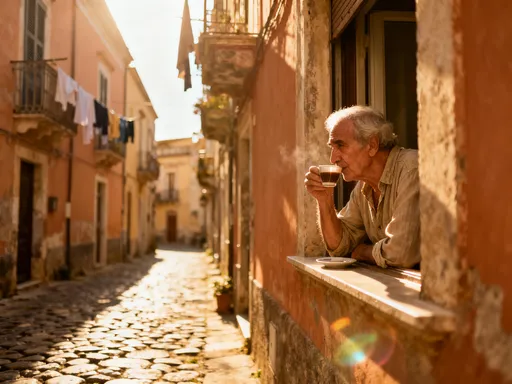
Slow travel isn’t just about moving at a relaxed pace—it’s about sinking into the soul of a place. In Sicily, this means wandering sun-drenched piazzas, lingering over espresso like the locals do, and discovering how history, culture, and flavor weave into everyday life. I didn’t just visit Sicily; I lived it. And what I found were not just destinations, but living, breathing themes—each town a chapter, each meal a memory in the making. The island rewards those who stay long enough to listen, to taste, to truly see. This is not a place to rush through, but to settle into, like a well-worn chair in a family courtyard where stories unfold with every passing hour.
The Rhythm of Sicilian Time
Sicily operates on a rhythm all its own, one that defies the ticking urgency of modern life. Here, time is not measured in minutes but in moments: the slow pour of espresso at a corner bar, the laughter shared over a midday meal, the quiet hush that falls over towns during the afternoon siesta. This unhurried pace is not laziness—it is intentionality, a cultural rhythm that values presence over productivity. For travelers accustomed to packed itineraries and timed tours, adjusting to Sicilian time can be a revelation. It invites a deeper kind of engagement, where observation replaces checklist tourism and connection becomes the true souvenir.
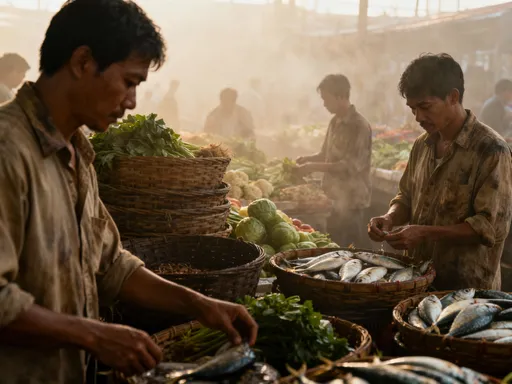
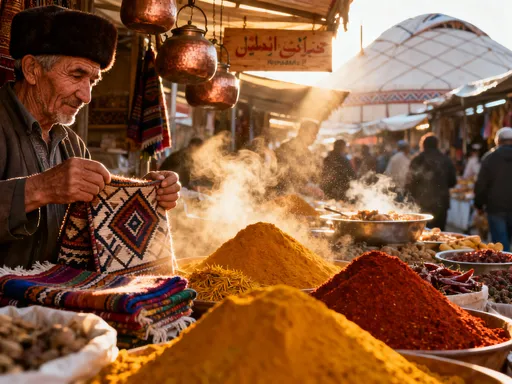
Mornings in Sicilian towns unfold gently. Markets begin to stir by 7 a.m., with vendors arranging pyramids of blood oranges, figs, and prickly pears on wooden crates. The air fills with the scent of fresh bread and grilled fish, mingling with the salty breeze from the sea. Locals drift in slowly, shopping with care, exchanging news and jokes with stall owners they’ve known for decades. This is not a transactional experience but a social ritual, one that unfolds over an hour or more. To witness it is to understand that in Sicily, even errands are acts of community.
By midday, the pace slows further. Shops pull down their shutters, streets empty, and families gather around long tables for the day’s main meal. This tradition—lunch as the centerpiece of the day—is still deeply honored, especially in smaller towns. It’s not uncommon for restaurants to close between 2 p.m. and 5 p.m., not out of inconvenience but out of respect for this sacred pause. For the slow traveler, this offers a chance to rest, to read in a shaded courtyard, or simply to watch the light shift across ancient stone walls.
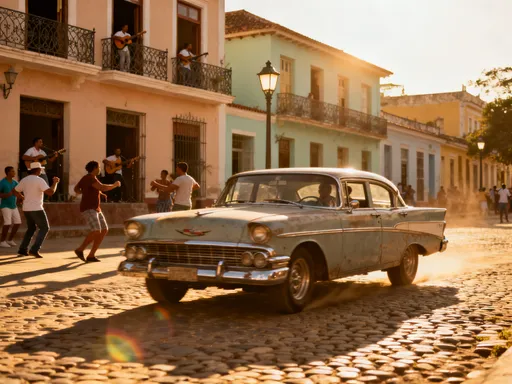
In the evening, life returns with the passeggiata—the leisurely evening stroll. Families emerge, dressed in their best, walking the corso or circling the piazza. Children chase each other between fountains, couples linger at cafés, and elders sit on benches, observing the world go by. There is no rush, no destination—only the pleasure of being together, of being seen, of belonging. To join this ritual is to step into the heartbeat of Sicilian life. It is in these unhurried moments that the island reveals itself, not as a series of sights to see, but as a way of living to be absorbed.
Palermo: A Tapestry of Contrasts
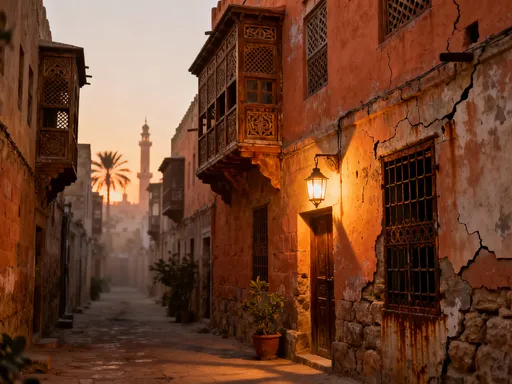
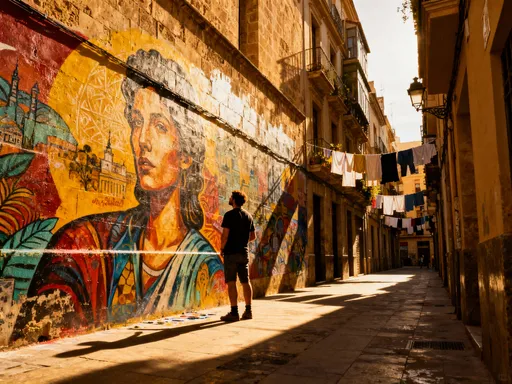
Palermo, the capital of Sicily, is a city of layered identities, where centuries of conquest and coexistence have created a vibrant, sometimes chaotic, urban mosaic. Walking its streets is like flipping through the pages of a living history book—Arab arches frame Norman mosaics, Baroque balconies drip with wrought iron, and street art tags compete with ancient frescoes. The city does not hide its scars; it wears them with pride, a testament to resilience and reinvention. For the slow traveler, Palermo offers not just sights, but sensations—the smell of frying panelle, the sound of Vespas echoing through narrow alleys, the warmth of a vendor pressing a sample of cassata into your hand.
The heart of Palermo’s sensory experience lies in its markets. Vucciria, once a bustling hub of daily commerce, has evolved into a place where tradition and tourism intersect. By day, it offers fresh produce, olives, and cheeses; by night, it transforms into an open-air dining scene with plastic tables and lively music. While some lament its loss of authenticity, the market still pulses with local life, especially in the early morning hours. Nearby, Ballarò remains more grounded in everyday use, a sprawling maze of stalls where housewives bargain for artichokes and fishermen unload the morning’s catch. For visitors, the key is timing: arriving early, moving with curiosity rather than expectation, and embracing the controlled chaos.
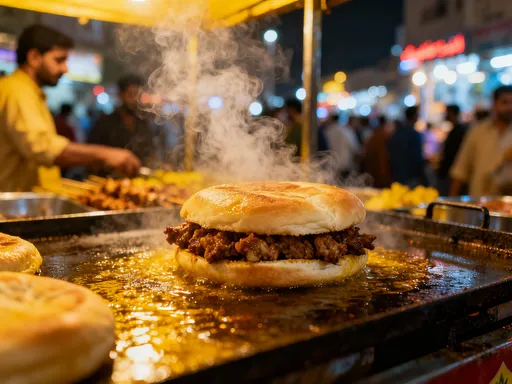
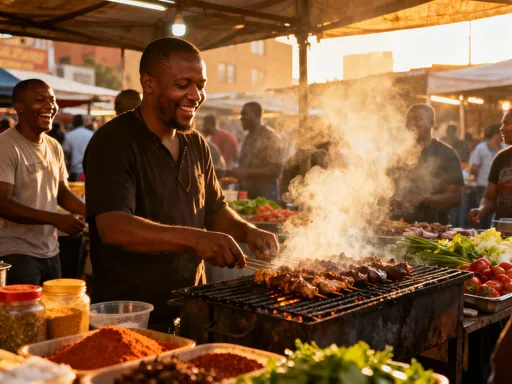
One of the most authentic culinary experiences in Palermo is trying pane con la milza—freshly fried spleen sandwiches, a legacy of the city’s working-class roots. Found at historic stands like Passami l’Olio or Focacceria S. Francesco, this dish is not for the faint of heart, but it is deeply loved by locals. The bread is crisp and warm, the spleen rich and savory, topped with sharp cheese and a squeeze of lemon. Sharing a sandwich at a standing counter, wiping grease from your fingers with a paper napkin, is a moment of real connection—one that no guided tour could fully replicate.
For a quieter side of the city, the Kalsa district offers a glimpse into Palermo’s quieter rhythms. Once a noble quarter, then a war-damaged neighborhood, it has been slowly revitalized with art galleries, boutique hotels, and family-run trattorias. Wandering its narrow lanes, one can hear the call to prayer from a mosque housed in a former church, a symbol of the city’s enduring diversity. The Zisa Palace, a UNESCO World Heritage site, stands as a reminder of Arab-Norman elegance, its fountains and gardens offering a peaceful retreat. In Palermo, contrasts are not contradictions—they are the essence of its identity, and the slow traveler learns to hold them with grace.
Syracuse & Ortigia: History That Breathes
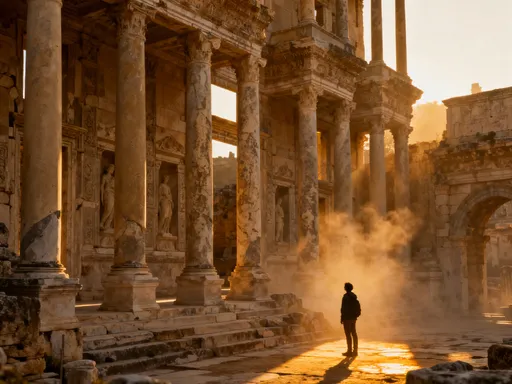
If Palermo is a symphony of contrasts, Ortigia—the historic island heart of Syracuse—is a sonnet of continuity. Connected to the mainland by three bridges, this small peninsula feels like a world apart, where ancient stones seem to breathe with memory. Walking through Ortigia is like stepping into a living museum, where Greek temples support Baroque churches and medieval alleys open onto sunlit piazzas. The city’s layers are not hidden—they are visible in the very fabric of its walls, in the way a Doric column rises beside a 17th-century fountain, in the sound of church bells echoing over the Ionian Sea.
The Fountain of Arethusa, a natural spring that emerges from the sea, is one of Ortigia’s most poetic landmarks. According to myth, the nymph Arethusa fled here from Greece, transformed into a spring to escape persecution. Today, papyrus plants grow in the salty water, a rare sight in Europe, and locals gather to admire the view at sunrise. The surrounding waterfront, with its whitewashed buildings and blooming bougainvillea, is perfect for a morning walk. Fishermen still bring in their daily catch near the Fonte Aretusa, selling octopus and sardines from wooden crates—a tradition unchanged for generations.
Ortigia’s preservation is a quiet triumph. Unlike some historic centers overwhelmed by mass tourism, this island has managed to balance visitor interest with daily life. Locals still shop at the market on Piazza del Duomo, children play in shaded courtyards, and old men argue over chess in the afternoon sun. This authenticity is carefully maintained—strict regulations protect the island’s architecture, and many shops are locally owned. For travelers, this means that exploration feels respectful rather than intrusive. Guided walking tours, led by Sicilian historians or architects, offer deep insights into the island’s past without reducing it to a performance.
One of the most rewarding experiences is discovering Ortigia’s hidden courtyards—small, often overlooked spaces tucked behind unassuming doors. Some are private, but others are open to the public, filled with potted plants, laundry lines, and the scent of jasmine. These spaces reflect the Sicilian love for private beauty, for moments of quiet within the public realm. To find one is to be rewarded not with a photo op, but with a feeling—a sense of having glimpsed something true. As the sun sets behind the Temple of Apollo, casting golden light across the stone, the island feels not like a relic, but like a home, alive and cherished.
Ragusa and the Baroque Heart
Perched on a limestone hill in southeastern Sicily, Ragusa is a city of two souls. Ragusa Superiore, the modern upper town, spreads across a plateau with wide avenues and contemporary life. But it is Ragusa Ibla, the historic lower town, that captures the imagination—a honey-colored labyrinth of baroque alleys, steep staircases, and intimate piazzas that seem to glow in the afternoon light. Rebuilt after the devastating 1693 earthquake that destroyed much of southeastern Sicily, Ragusa Ibla is a UNESCO World Heritage site and one of the finest examples of Sicilian Baroque architecture. Its beauty is not cold or museum-like; it is warm, lived-in, and deeply human.
The journey down into Ibla is part of the experience—a descent that feels almost ceremonial, as the noise of the modern world fades and the stone walls rise higher. The main square, Piazza Duomo, is a masterpiece of symmetry and light, dominated by the Cathedral of San Giorgio, whose grand staircase ascends like a theatrical stage. Inside, golden mosaics shimmer, and the scent of beeswax lingers in the air. Yet just steps away, life unfolds in ordinary ways: a woman hangs laundry from a balcony, a cat naps in a sunbeam, a barista polishes an espresso machine behind a tiny counter. This coexistence of grandeur and daily life is what makes Ragusa Ibla so special.
The best time to visit is late afternoon, when day-trippers have returned to their buses and the golden hour bathes the stone in a soft, amber glow. The air cools, the shadows lengthen, and the town takes on a dreamlike quality. Locals begin to emerge for the passeggiata, strolling past flower-filled balconies and artisan shops. A few cafés, like Caffè Sicilia, have become institutions—not for their size, but for their dedication to tradition. Here, one can taste granita made with real almond milk or cannoli filled to order, their shells crisp and delicate.
Staying overnight in Ragusa Ibla transforms the experience. Waking to the sound of church bells, walking empty streets at dawn, sharing breakfast with a host who speaks of family history—these moments create a deeper bond with the place. The town does not perform for visitors; it simply exists, and in doing so, it invites presence. For the slow traveler, Ragusa is not just a destination, but a meditation on beauty, resilience, and the quiet dignity of a life well-lived.
The Coastal Pulse: From Marzamemi to Cefalù
Sicily’s coastline is as varied as its history, offering everything from rugged cliffs to golden beaches, from sleepy fishing villages to lively seaside towns. Two destinations that embody this diversity are Marzamemi and Cefalù, each celebrating the sea in its own way. Marzamemi, a tiny fishing village on the southeastern tip of the island, feels like a secret whispered among those in the know. Once a center for tuna fishing and processing, it retains a working waterfront where boats still dock with the morning’s catch. Its narrow, whitewashed streets are strung with fishing nets, and the scent of salt and grilled fish lingers in the air. Dining here means sitting at a wooden table by the harbor, ordering tuna tartare or spaghetti with bottarga, and watching the sun dip below the horizon.
What makes Marzamemi special is its intimacy. There are no large hotels, few signs in English, and a noticeable absence of crowds. Visitors stay in small family-run accommodations or nearby agriturismi, waking to the sound of waves and the cry of gulls. The pace is slow, the conversations quiet. In summer, the village hosts a film festival that brings artists and filmmakers, but even then, it maintains its sense of calm. For the slow traveler, Marzamemi is a reminder that beauty does not require spectacle—it can be found in the simple act of sitting by the sea, listening to the water lap against the stones.
Cefalù, on the northern coast, offers a different kind of coastal charm. Framed by a dramatic rocky outcrop and a long sandy beach, it has long been a favorite of Italian families. Its medieval streets climb steeply from the shore, lined with shops selling ceramics, lemon syrup, and handmade sandals. The Norman cathedral, with its grand mosaic of Christ Pantocrator, stands as a cultural anchor, its presence felt even in the busiest summer months. Yet beyond the postcard views, Cefalù has a relaxed rhythm. Locals swim in the morning, eat lunch at family-owned trattorias, and gather in the evening for gelato and conversation.
For those seeking a quieter experience, the path along the rocky coast leads to hidden coves and natural grottos, perfect for swimming away from the main beach. Staying in a small pensione or apartment above a bakery allows for immersion in daily life—the smell of fresh bread at dawn, the chatter of neighbors, the rhythm of tides and meals. Both Marzamemi and Cefalù remind us that Sicily’s coast is not just a backdrop, but a way of life—one shaped by the sea, sustained by tradition, and open to those who come with respect and stillness.
Cultural Threads: Food, Festivals, and Family
In Sicily, culture is not confined to museums or monuments—it is lived, daily, in kitchens, piazzas, and family homes. Food is the most visible thread, weaving through every season and celebration. Caponata, the sweet-and-sour eggplant stew, is more than a dish; it is a metaphor for the island itself—complex, layered, born of necessity and refined by time. Each family has its version, passed down through generations, with variations in vinegar, capers, or the addition of celery. To be invited to share it is to be welcomed into a story.
Meals in Sicily are events, not meals. They unfold over hours, beginning with antipasti of marinated vegetables and cured meats, moving through pasta dishes like pasta alla Norma or sarde a beccafico, and ending with fruit, cheese, or a slice of cassata. The table is a place of connection, where grandparents tell stories, children are allowed to stay up late, and strangers become friends. Agriturismi—family-run farm stays—offer a chance to participate in this rhythm, helping to harvest tomatoes, press olives, or roll pasta by hand. These experiences are not performances; they are real moments of shared labor and joy.
Festivals, or sagre, are another expression of Sicilian life. Held in towns across the island, they celebrate everything from almonds to anchovies, from saints to seasons. One summer evening in Noto, I joined a sagra dedicated to the tomato. The piazza was strung with lights, musicians played folk songs, and long tables were set for hundreds. There was no entry fee, no official program—just food, music, and community. I sat beside a woman who handed me a plate of pasta with fresh pomodoro, saying, “Mangia, è caldo.” Eat, it’s hot. In that moment, I was not a tourist, but a guest.
These cultural threads—food, festivals, family—are not tourist attractions. They are the fabric of Sicilian identity, worn with pride and shared with care. For the slow traveler, the invitation is not to observe, but to participate—to learn a recipe, to join a dance, to say grazie with sincerity. It is in these small acts of connection that the true heart of Sicily is found.
Traveling with Purpose: Staying Longer, Giving Back
The most meaningful way to experience Sicily is not to pass through, but to stay. Extended visits—two weeks, a month, even longer—allow for rhythms to sync, for relationships to form, for the surface to give way to depth. Choosing a family-run pensione over a chain hotel, shopping at local markets, learning a few phrases in Italian (or even Sicilian dialect)—these small decisions shape the experience and support the community. Tourism, when done with care, can be a force for preservation, helping to sustain traditions that might otherwise fade.
Supporting artisans, from ceramicists in Caltagirone to lace makers in Pizzo, ensures that skills passed down for centuries continue to thrive. Dining at family-owned trattorias, rather than tourist-focused restaurants, keeps income in local hands. Even something as simple as greeting a shopkeeper with “buongiorno” instead of rushing in and out can make a difference. These gestures, small as they may seem, build bridges of respect and reciprocity.
Learning about Sicily’s history—the Greek temples, the Arab influence, the Norman conquests—adds depth to the journey. Reading a book by a Sicilian author, visiting a local museum, or taking a cooking class with a nonna can transform sightseeing into understanding. The island has endured hardship—earthquakes, poverty, organized crime—but it has also shown extraordinary resilience. To travel here is to witness that resilience, not as a tragedy, but as a source of strength.
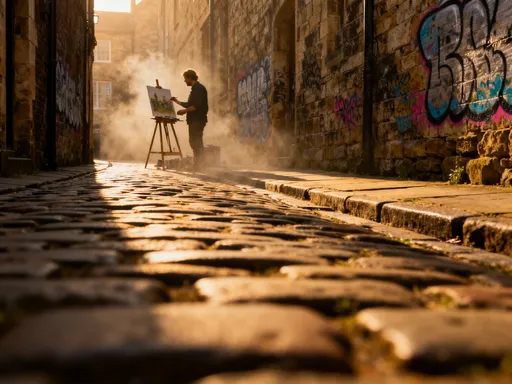
In the end, Sicily is not a checklist of sites to conquer, but a relationship to nurture. It asks for time, attention, and humility. It rewards with warmth, beauty, and a sense of belonging. To walk its cobblestone streets is to hear the whispers of history, to taste the richness of culture, to feel the pulse of a people who know how to live well. And in that unhurried embrace, the traveler finds not just a destination, but a deeper way of being.